Skip to content

Table of Contents
If your jaw aches when you wake up, or your lower face looks squarer than it used to, one overworked chewing muscle could be behind both. Botox for TMJ targets that muscle, the masseter, to ease jaw tension and gradually soften a wide jawline. At Amara Rejuve Medical Spa & Laser in Yuma AZ , we use this approach to address the tension and the shape at the same time.
Here is how masseter Botox works, who it tends to help, and what to expect if you deal with clenching, grinding, or a tight, tired jaw.
What does masseter Botox do for a clenched jaw and a square jawline?
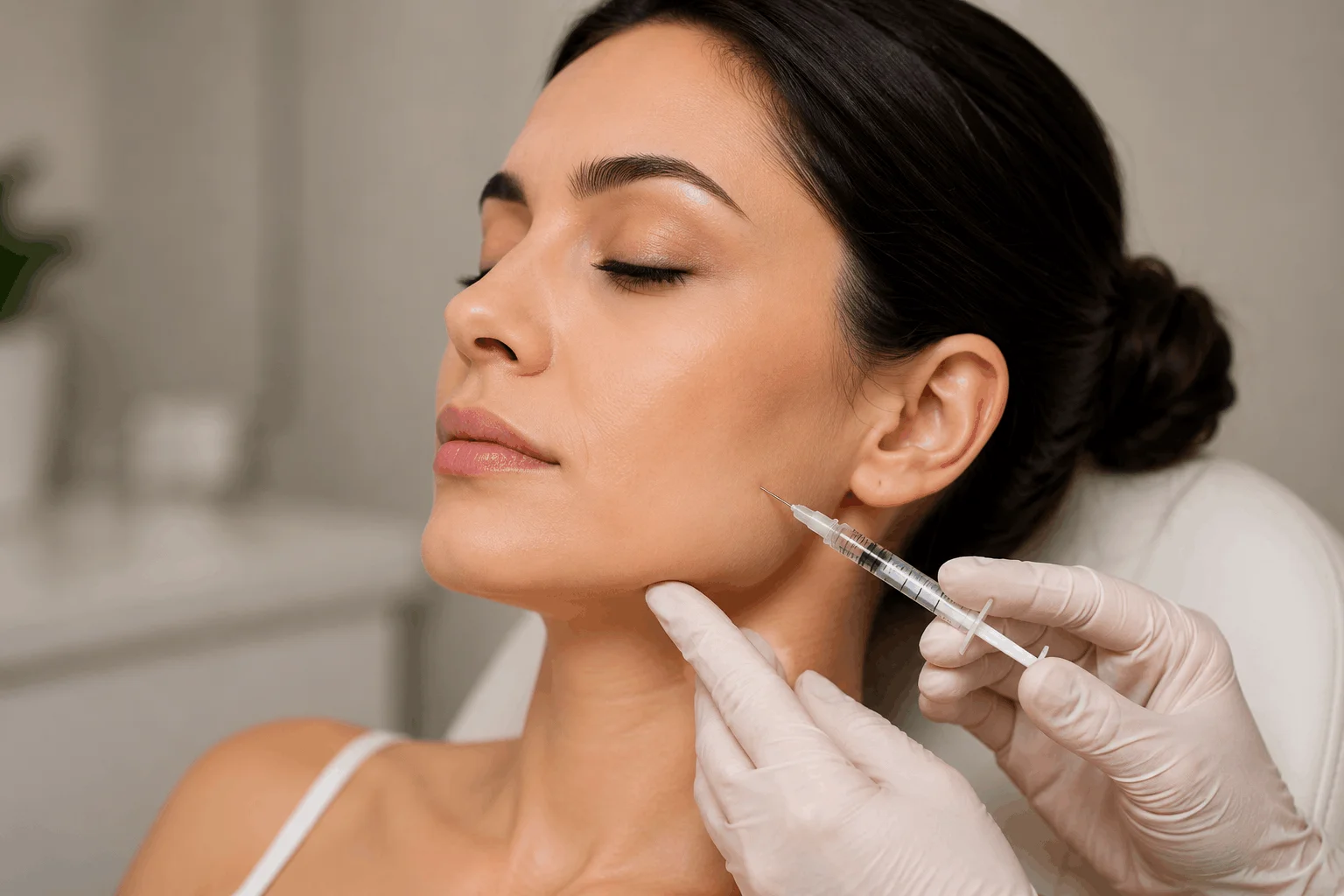
For many patients, masseter Botox can do both. It relaxes the masseter, the main chewing muscle, by reducing the nerve signals that tell it to contract. With less clenching, there is less strain on the jaw, which eases tension and pain. Over time the muscle shrinks from reduced use, and that gradual change softens a square jawline. Results vary, so a provider assesses fit first.
Why Jaw Tension and a Wider Jaw Often Go Together
Jaw tension and a wider jawline usually trace back to the same source: an overworked masseter. The masseter is the main chewing muscle, sitting at the back of the jaw on each side. It can become overactive from clenching, teeth grinding (known clinically as bruxism), or ordinary stress.
When that muscle stays tight, the effects show up in two ways. Constant overuse keeps it contracted, which drives jaw soreness, tension headaches, and aching near the ear. Over months and years, the same repeated strain can enlarge the muscle. A bulkier masseter widens and squares the lower face, which is why jaw tension and a broader jawline so often appear together.
What TMJ Pain Actually Feels Like
TMJ pain usually shows up as soreness and tightness in and around the jaw. The most common signs include:
- An aching or tight jaw, often worst right after you wake up
- Clicking or popping when you open your mouth
- A dull ache that spreads to your temples or ears
- Headaches that seem to start at the jaw
Teeth grinding and clenching often happen during sleep, so you may be doing it without realizing. Worn teeth, a sore morning jaw, or a partner who hears the grinding are frequent clues.
One honest note: TMJ discomfort has several possible causes, and not all of them respond to masseter Botox. That is exactly why an assessment matters, which we will come back to.
How Botox for the Masseter Relieves Tension and Slims the Face
Masseter Botox works by calming the muscle that is causing the trouble. Botox temporarily reduces the nerve signals that tell the masseter to contract. With those signals dialed down, the muscle relaxes and clenches with far less force. That single change is behind both results. Less clenching means less strain on the jaw joint and the surrounding muscles, and that reduced strain is what eases the pain and tension. Then, because the muscle is being used less, it gradually decreases in size over time. That slow, natural reduction is what softens a square jawline and creates a more contoured, non-surgical jawline. So the same treatment that quiets the ache also produces the face slimming Botox effect.
When to Get Your Jaw Pain Checked First
Persistent or worsening jaw pain deserves a professional evaluation before you assume Botox is the fix. Have it looked at properly if you notice any of these:
- Your jaw locks or catches when you open or close it
- The pain is getting sharper rather than easing
- It is interfering with eating, talking, or daily life
A provider can help rule out other causes, such as dental problems, joint damage, or conditions that call for a different kind of care. Masseter Botox addresses an overactive muscle, so if something else is driving the pain, it may need a different plan. A night guard, physical therapy, or dental care can also work alongside injections or, at times, be the better place to start. During a consultation at our Yuma AZ office, we talk through your symptoms and history so the plan matches the actual cause.
What Results Look Like and How Long They Take
Results from TMJ Botox appear on two different timelines. Many patients notice reduced clenching and less jaw tension within a couple of weeks, once the muscle begins to relax.
The slimming effect is more gradual. Because it depends on the masseter shrinking from reduced use, visible facial contouring usually becomes noticeable over several weeks to a few months.
Results are also temporary, and the muscle relaxation wears off over time, so repeat treatments are common to maintain both the comfort and the shape. Outcomes vary from one person to the next, depending on muscle size, how strong the clenching habit is, and individual anatomy.
Who Tends to Be a Good Candidate
Good candidates for masseter Botox usually share a few traits:
- Ongoing jaw tension or a clenching or grinding habit
- A strong or noticeably enlarged masseter muscle
- A wider or squarer lower face you would like to soften
That said, candidacy depends on the full picture: your symptoms, muscle size, medical history, and your goals. A consultation is how those pieces get sorted. Not everyone with a square jaw has an overactive masseter, and a naturally broad jaw from bone structure will not respond to muscle treatment the same way. An in-person assessment is the only reliable way to tell what is shaping the jaw and whether Botox for TMJ and slimming is a good match for you.
Ready to Give Your Jaw Some Relief?
Living with a tight, aching jaw is draining, and feeling self-conscious about a square jawline on top of it is a lot to carry. The encouraging part is that one well-placed treatment can address both at once. If you are curious whether masseter Botox is right for you, the team at Amara Rejuve Medical Spa & Laser is here to help. Schedule a consultation at our Yuma AZ location, and we will assess your jaw, answer your questions, and map out a plan built around you.